No products in the cart.
The difference between hazard & risk can confuse many people. These two words sound similar, but they do not mean the same thing. A hazard is something that can cause damage or danger. A risk shows the chance that a hazard may hurt someone. This idea is important in homes, schools, workplaces and public places.
Let’s make it easier to understand. A broken chair is a hazard. The risk is that someone could fall and get injured while sitting on it. So, the hazard is the dangerous thing and the risk is the chance of harm.
Let’s look at the difference between hazard and risk in a simple way.
Why Should You Learn the Difference Between Hazard & Risk Today?
Learning the difference between hazard and risk helps you stay safe in everyday life. You see hazards all around you, like wet floors, sharp tools or fire. But risk tells you how likely it is that these dangers will hurt you. So, when you understand both, you can act smarter and avoid accidents.
At home, at school or at work, this knowledge helps you make better choices. For example, you can walk carefully on a wet floor or handle tools with care. This simple habit can stop many injuries before they happen. Also, safety skills build confidence. You start noticing danger early and respond appropriately. So, you protect yourself and also help others stay safe.
Where Do We See Common Hazards and Risks in British Workplaces?
In British workplaces, we see hazards and risks in many everyday situations. Similarly, in offices, people face risks like long sitting hours, poor posture and loose wires on the floor. Also, hospitals, workers deal with chemicals, infections and sharp tools.
In construction sites, heavy machines, falling objects and unsafe heights create serious dangers. Furthermore, lifting heavy items in shops and warehouses can cause strain or injury. Kitchens also have risks like hot surfaces, fire and slippery floors. So, every workplace has some form of hazard, no matter how safe it looks.
When workers understand these dangers, they can act early and stay safe. As a result, simple safety steps like using equipment properly and keeping areas clean can reduce many risks every day.
What is the Main Difference Between a Hazard and a Risk?
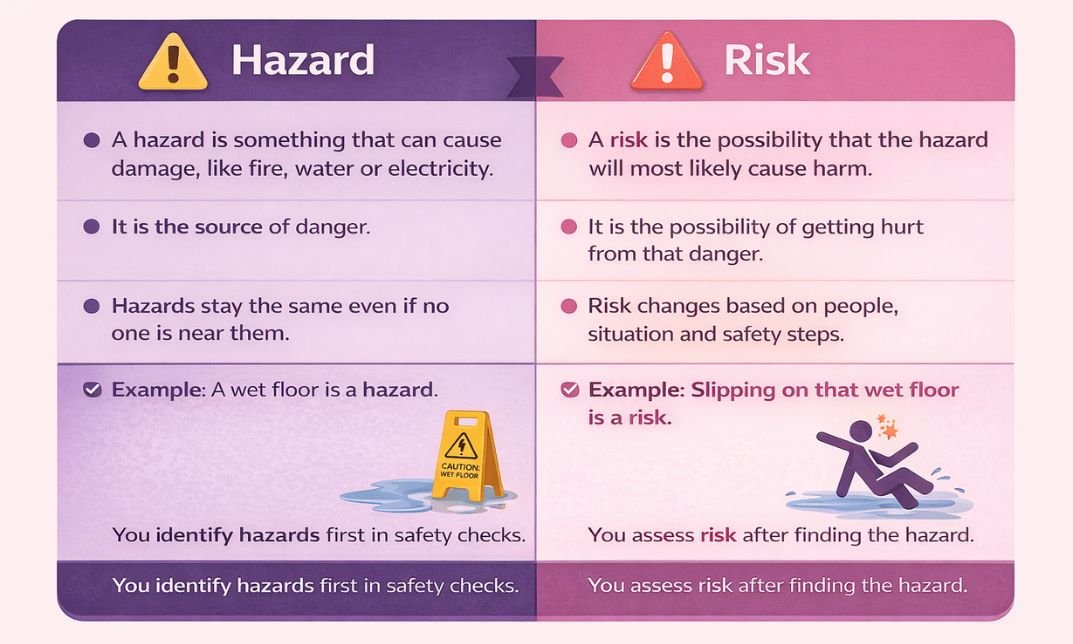
Safety starts with knowing what can go wrong and how it can affect us in real life. This table will help you clearly see hazard vs risk.
Key difference between Hazard and risk:
How Do Managers Handle Risk and Hazards to Protect Employees?
Managers handle risk and hazards by first looking for anything that can cause harm in the workplace. They walk around, check equipment and talk with workers to spot problems early. After that, they think about how serious each risk is and who it may affect.
Next, they take action to reduce danger. They fix unsafe equipment, clean risky areas and set clear safety rules for everyone. They also give simple training so workers know how to stay safe in daily tasks.
Along with that, managers use warning signs and safety gear like helmets, gloves and masks. They also encourage workers to report any hazards right away. This helps stop small problems from becoming big accidents. So, good managers stay alert, act quickly and keep safety as their top priority every day.
How Does the UK Government Define a Workplace Hazard?
The UK government describes a workplace hazard as anything that can cause injury to a worker. It can be a thing, a situation or even a work process. So, it includes many different dangers found in everyday jobs.
In simple terms, a hazard means something that can hurt people, damage health or cause accidents at work. For example, wet floors, sharp tools, loud noise and harmful chemicals are all hazards. Even stress or poor lighting can also become hazards in the workplace.
So, the main idea is clear. A hazard is not the accident itself, but something that can lead to harm. When workers understand this, they can notice dangers early. As a result, they can take safe steps and reduce the chance of injury at work.
Which Steps Help You Find the Difference Between Hazard & Risk at Home?
Safety starts with small habits and careful observation. When you understand hazards and risks, you can easily prevent accidents before they happen.
- Walk around your home and look carefully at each area. Notice things like wet floors, sharp objects or loose wires that can cause harm.
- Think about what could go wrong in each place. This helps you identify the hazard and understand what danger it may create for people.
- Check who may get hurt, such as children, elders or guests. This step helps you understand the real risk in daily life situations.
- Look at how likely an accident can happen. A small chance means low risk, while a higher chance means greater risk.
- Take simple action to reduce danger, like cleaning spills, fixing wires or storing sharp items safely in drawers or boxes.
- Review your home often and stay alert to new hazards. This habit helps you keep safety strong and avoid accidents over time.
Why is Risk Level Different for Every Person?
Risk level is different for every person because each person’s situation is not the same. Age, health and experience all play a big role. For example, a trained worker may handle tools safely, while a new worker may face more risk. Also, the place and type of work can change the risk level. A wet floor may be risky for everyone, but it is more dangerous for someone who is running. Even daily habits and awareness matter a lot. When people pay attention to safety rules, they reduce their risk. So, risk is not fixed for everyone. It changes based on the person and the situation around them.
How Do You Reduce the Risk of a Trip or Fall?
To prevent the risk of a trip or fall, start by keeping walkways clean and clear. Remove loose wires, toys or anything that blocks the path. Also, fix uneven floors and make sure carpets do not slip. Good lighting helps you see where you are walking, so always keep rooms bright.
Next, wear proper shoes with a good grip instead of slippery footwear. Take your time when walking, especially on stairs or wet surfaces. Use handrails when they are available. At home or work, check the area often and fix small hazards quickly. So, with these simple habits, you can stay safe and avoid most trips and falls in daily life.
What are the Best Ways to Report a Hazard?
Reporting a hazard helps keep everyone safe and prevents accidents. These simple steps help create a safer place for everyone at work and in daily life.
- Stay relaxed and check if the area is safe before you take action.
- Inform your supervisor or manager as soon as you see the hazard.
- Use the workplace reporting form or safety system to record it properly.
- Describe the hazard in clear and simple words so others can understand it easily.
- Add extra details like location or photos if it helps explain the issue better.
- Follow up later to see if someone has fixed the problem.
- Report again if the hazard is still there or not resolved.
Where Can You Find Free Safety Training in Your Local Area?
You can find free safety training in many places around your local area. Start by checking community centres, local councils and job centres, as they often run short safety courses. Also, you can visit hospitals, schools and construction sites, as they sometimes offer basic health and safety awareness sessions.
On the other hand, many charities and non-profit groups also provide free training for beginners. Some online platforms even offer free safety courses that you can join from home. So, take a little time to explore these options near you. With the right training, you can learn how to stay safe, protect others and build useful skills for work and daily life.
What Happens If an Employer Ignores a Serious Hazard?
If an employer ignores a serious hazard, workers face real danger every day. Accidents can happen quickly and cause injuries or even long-term health problems. In some scenarios, it can also lead to serious emergencies like fires or chemical exposure.
At the same time, the workplace becomes unsafe and stressful for everyone. Workers may feel worried and lose trust in their employer. Over time, this can also affect work quality and productivity. On the other hand, employers may face legal action, fines or shutdowns if they fail to act. So, it is always important to fix hazards quickly and keep everyone safe.
What are the Final Tips to Remember These Safety Terms Easily?
Here are some simple tips to help you remember safety terms in an easy way.
- Always remember that a hazard is the danger itself, while risk is the chance of harm. Think of hazard as the source and risk as the result.
- Look around your home or school and try to find hazards like wet floors or sharp tools, then think about the risk they can create.
- Use easy real-life examples to understand faster.
- Practice this daily so you can quickly spot danger and make safer choices in real life.
Final Thoughts
To sum up, knowing the difference between hazard & risk is very important for safety. A hazard is something that can cause physical damage, while a risk is the chance that harm will occur. So, when you understand both, you can spot danger faster. Also, you can make better decisions and create a safer place for everyone.
Want to improve your safety skills at work and avoid common risks? Visit our blog “Control of Substances Hazardous to Health (COSHH) Training Course“ for simple guidance and helpful tips on COSHH safety training.
Frequently Asked Questions (FAQs)
1. What is the main difference between a hazard and a risk?
- A hazard is something that can cause damage, while a risk is the chance that damage will actually happen.
2. What are the 5 examples of hazard and risk?
- Common examples include slippery floors, sharp tools, electricity, fire and chemicals, which can all create different levels of risk.
3. Which comes first, hazard or risk?
- A hazard comes first and then we assess the risk linked to it.
4. What is considered a hazard but not a risk?
- A hazard is something dangerous like a wet floor, but it is not a risk until someone may actually slip on it.
5. What are the 4 types of hazards?
- The four types are physical, chemical, biological and ergonomic hazards.
6. What are the 4 types of risk?
- The four types are low risk, medium risk, high risk and very high risk.
7. What are the 4 P’s of risk?
- The 4 P’s are People, Property, Processes and Planet, which help identify where risks can affect.
8. What are the 7 key types of risk?
- The seven key types include strategic, financial, operational, compliance, reputational, market and safety risks.
9. What are the two basic types of risk?
- The two basic types are pure risk and speculative risk.
Control of Substances Hazardous to Health (COSHH) Training Course
Course Description :
- Certificate: Yes(Free)
- Accreditation: CPD Accredited
- Access: Lifetime