
No products in the cart.
Hazard symbols help you spot danger fast, so you stay safe around chemicals. These red diamond hazard pictograms appear on chemical labels and Safety Data Sheets in the UK. The UK follows the GB CLP rules, which use the UN GHS system, so hazard symbols and meanings stay the same everywhere. In 2015, the old orange CHIP icons changed to today’s clear CLP designs.
In this guide, you’ll learn what the symbols look like, why they changed, what GB CLP covers, and the nine symbols with their meanings. You’ll also see the “Danger” and “Warning” signal words and where to view all hazard symbols and meanings together. And, of course, you can download a one-page poster to print for your chemical store.
What Are Hazard Symbols?
Hazard symbols are small black icons inside a red diamond. They quickly show the main dangers of a chemical, helping you stay safe. Think of them as little warning signs that grab your attention before something goes wrong.
You’ll see these symbols on product labels and in Section 2 of the Safety Data Sheet (SDS). They show key risks like flammability, toxicity, or corrosion at a glance. At work, posters and signs often repeat the same symbols so everyone can recognise hazards fast. Learning these COSHH symbols and meanings helps you handle chemicals safely, avoid accidents, and protect yourself and others.
Some symbols also come with signal words like “Danger” or “Warning” to show how serious the risk is. By knowing what each symbol means, you can take the right precautions every time you use a chemical.
What Are the GB CLP Symbols?
In Great Britain, chemicals follow GB CLP regulations (Classification, Labelling and Packaging). These rules tell you exactly which pictograms, signal words, hazard statements and precautionary statements must appear on every label and package. This makes it easy to understand the risks before you use any chemical.
GB CLP applies to almost all substances and mixtures used at work, from everyday cleaning products to industrial chemicals. The clear CLP hazard symbols quickly show if a chemical is flammable, toxic, corrosive, or harmful to the environment. By recognising these symbols, you can take the right precautions, stay safe, and protect everyone around you.
Why Did the Old Orange Symbols Change?
Before 2015, chemicals in the UK used CHIP symbols—orange squares—to show hazards. These symbols were often confusing, and their meanings could differ between countries. To make things simpler and safer, the UK switched to CLP symbols—red diamonds—which follow the UN GHS system. This change ensures that hazard warnings are clear, consistent, and easy to understand, no matter where you are.
The update also introduced standard signal words like “Danger” and “Warning”, and standard hazard statements that explain the risk more clearly. It’s important not to use old CHIP graphics in new labels or materials. Using the correct hazard pictograms helps everyone recognise risks quickly, take the right precautions, and keep the workplace safe.
What Is the GHS System?
The GHS system is the UN’s global standard, created in 1992, for classifying and labelling chemicals. Its main goal is to make hazard warnings consistent worldwide, so anyone can understand the risks quickly, no matter what country they are in.
GHS uses standard pictograms, clear hazard statements, and precautionary instructions to show the dangers of chemicals. It covers different types of hazards, including physical dangers like flammability, health hazards like toxicity, and environmental risks like damage to water or wildlife.
In Great Britain, GHS is applied through GB CLP regulations, which ensure all substances and mixtures used at work follow the same rules. This consistency helps prevent accidents, protects workers, and makes it easier for companies to handle chemicals safely across borders. By recognising these hazardous symbols, everyone can quickly understand the risks, take the right precautions, and maintain a safe workplace.
Why Did the UN Create One Global System?
Before 1992, every country had its own rules for chemical hazards. This caused confusion and sometimes accidents, especially for workers handling chemicals from other countries. To solve this, the UN made a global system called GHS. The goal was simple: everyone should understand chemical dangers in the same way, no matter where they are. GHS uses clear chemical risk symbols, hazard statements, and safety instructions. It covers dangers like fire, health risks, and harm to the environment.
With one global system, workplaces are safer, accidents happen less, and companies can handle and share chemicals without confusion. It also makes it easier for everyone to learn the rules and stay safe.
What Do the UK CLP Rules Cover?
UK CLP rules explain what must appear on every chemical label to keep users safe. Labels must show the product name, pictograms, hazard statements (H-codes), precautionary statements (P-codes), and supplier contact details. These items give clear information about the chemical and how to handle it safely.
Labels must be strong, easy to read, and written in English. They should stay visible even in tough conditions, like heat, water, or chemical spills. If chemicals are poured into another container, that container must also be re-labelled with all the same information. Using correct hazard labels ensures everyone at work can quickly see the risks, take the right precautions, and prevent accidents.
What Are the Nine Hazard Symbols?
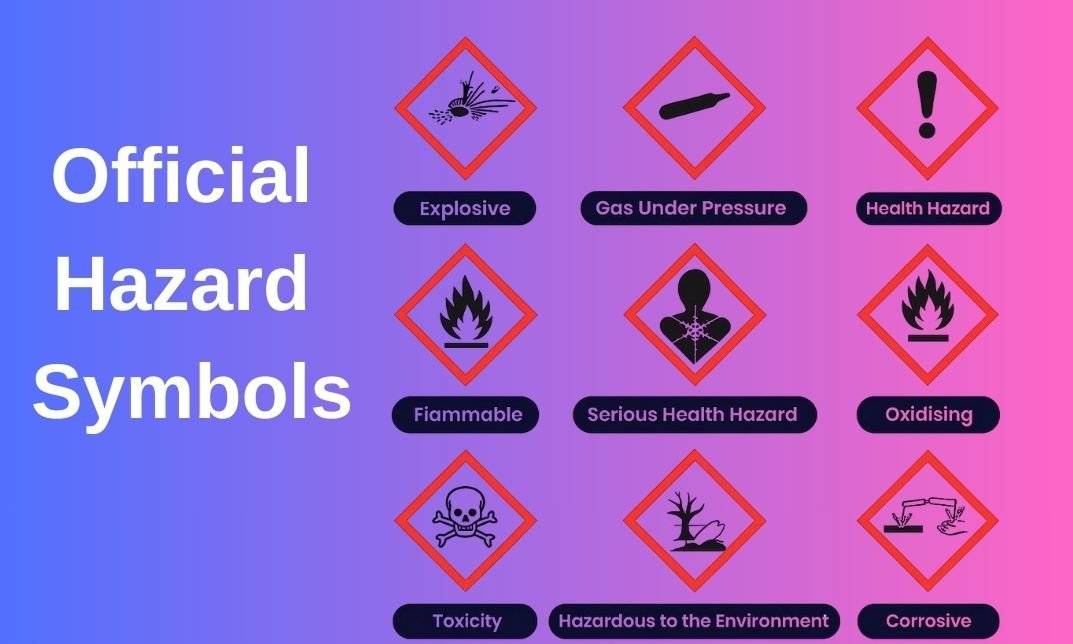
Here are the nine main hazard symbols you need to know, with simple meanings and extra details:
- Exploding Bomb – Explosives or unstable chemicals that can blow up. Handle with extreme care and keep away from heat, sparks, and impact.
- Flame – Flammable materials, self-heating substances, or those that release flammable gas. Keep them away from open flames and sources of heat.
- Flame over Circle – Oxidisers that can make fires worse. Even small amounts can cause other materials to catch fire easily.
- Gas Cylinder – Gases stored under pressure. These can explode if heated or damaged. Always store upright and secure properly.
- Corrosion – Can burn skin and eyes or damage metals. Wear gloves, goggles, and protective clothing when handling.
- Skull and Crossbones – Very toxic; even small amounts can be fatal if swallowed, inhaled, or absorbed through skin. Handle with extreme caution.
- Exclamation Mark – Irritant, harmful, skin sensitiser, or causes drowsiness. May cause allergic reactions or minor health effects.
- Health Hazard (silhouette) – Long-term effects like cancer, fertility issues, organ damage, or respiratory sensitiser. Exposure over time can seriously harm health.
- Environment (dead tree/fish) – Dangerous for rivers, lakes, and aquatic life. Avoid spills and dispose of chemicals safely.
These COSHH symbols help you see chemical dangers quickly. Understanding them makes handling substances safer and helps prevent workplace accidents.
What Do “Danger” and “Warning” Mean?
Chemical labels show only one signal word at a time. The word “Danger” is used for the most serious hazards, while “Warning” is for lower-severity risks in the same hazard class. It’s important to always read the signal word together with the chemical risk symbols, so you know exactly how serious the chemical is.
Signal words give a quick, clear alert about the level of risk. For example, a flammable liquid with “Danger” can catch fire very easily, while one with “Warning” is less likely to ignite quickly but still needs care. Paying attention to the signal word and the hazardous signs on the label helps you handle chemicals safely, wear the right protection and prevent accidents. It also reminds everyone in the workplace to treat each chemical with the right level of caution.
Where Can You See All the Hazard Symbols Together?
You can find hazard information in many places around your workplace. Check product labels on each container, Section 2 of the SDS, workplace posters or door signs, chemical store cabinets, and training handouts. Official GB CLP and GHS posters also show all the symbols in one place. Seeing them together helps you understand the risks quickly and remember how to handle chemicals safely.
It’s a great idea to put a downloadable A4 poster with all chemistry hazard symbols and their meanings near the chemical store and in labs. You can even place smaller versions on workbenches or next to equipment. This makes it easier for everyone—new staff, visitors, or experienced workers—to recognise hazards at a glance, follow safety rules, and prevent accidents. Keeping the symbols visible all the time reminds everyone to treat chemicals with care.
Final Thoughts on Hazard Symbols
Hazard symbols may look small, but they carry big, life-saving messages. When you understand what each symbol means, you don’t just follow rules—you protect yourself, your team, and your workplace. And honestly, once you get used to spotting them, staying safe around chemicals feels much easier and much more natural.
If you want to build real confidence with COSHH, learn the rules step by step, and handle chemicals safely every single day, you can take things further. The COSHH Training Course from Open Learning Academy breaks everything down in clear, simple English and shows you exactly what to do in real situations.
FAQs
1. What Are the 10 Hazard Symbols?
Under GB CLP rules, there are ten main hazard pictograms. Each one shows a different type of danger:
- Explosive – The symbol shows an exploding bomb.
- Flammable – A flame symbol.
- Oxidising – A flame over a circle.
- Corrosive – Shows liquid burning skin and metal.
- Toxic – The skull and crossbones sign.
- Harmful/Irritant – The exclamation mark.
- Health Hazard – The person with a star on the chest.
- Environmental Hazard – Dead trees and fish.
- Gas Under Pressure – Gas cylinder icon.
- Hazardous to the Ozone Layer – Also uses the exclamation mark symbol.
2. What Do COSHH Hazard Warning Symbols Look Like?
COSHH hazard symbols can be orange squares (old CHIP) or red diamonds (new CLP). Both types warn you about dangerous chemicals. They show the hazard clearly so workers and users can stay safe.
3. What Are the New Hazard Symbols?
The new COSHH symbols are black pictures inside a white diamond with a red border. They follow the global GHS system, which helps everyone identify dangerous or toxic chemicals in the same way.
4. What are safety symbols?
Safety symbols are pictures that give quick warnings. They show dangers, safe actions, and important information. You see them in workplaces, schools, and public places. Their job is to help people stay safe and avoid accidents.
5. What Are the 4 Health Hazards?
The four main workplace health hazards are:
- Biological hazards – germs, viruses, and bacteria.
- Chemical hazards – harmful liquids, gases, or fumes.
- Physical hazards – noise, heat, radiation, or vibration.
- Ergonomic hazards – poor posture, heavy lifting or repetitive work.


