
No products in the cart.
Motorcycles are popular across the UK. Thousands of people ride them to work every single day. Therefore, the demand for skilled mechanics grows constantly. Now, the main question is how to become a motorcycle mechanic.
To become a motorcycle mechanic, you usually start with a college course or an apprenticeship. Moreover, the motorcycle industry contributes £7 billion to the UK economy. This creates strong and steady job opportunities. You can work in busy garages and handle real repair tasks daily. Each day brings a new mechanical challenge. Therefore, the job stays active and engaging.
This guide will give you a clear path to begin without confusion.
How to become a motorcycle mechanic?
Starting a new career can feel scary at first. However, this path stays simple and clear. Most UK employers ask for basic GCSE results. You should pass Maths and English first. These subjects help you read manuals and measure parts. Once you have them, you can move forward. Additionally, many colleges offer beginner courses for new learners. You do not need special talent to begin. Instead, you need focus and a strong desire to learn.
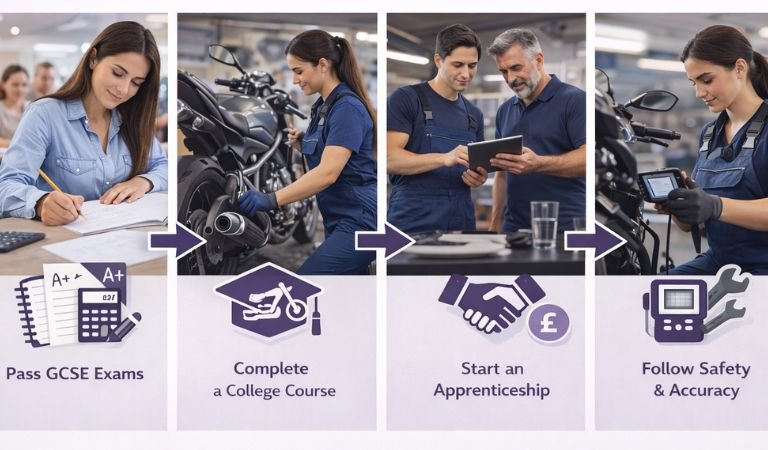
Many learners already love motorcycles before training starts. This passion gives you a strong advantage. However, professional work is very different from a hobby. You must follow strict safety rules every day. For example, you must tighten every bolt correctly. Also, you will learn to use proper diagnostic tools. These tools help you find faults quickly. Therefore, accuracy becomes very important in this job. You must aim to fix problems right the first time.
You can also choose an apprenticeship route. This option gives you real workshop experience. At the same time, you earn while you learn. As a result, you build skills faster. Over time, your confidence will grow.
So, what makes a great motorcycle mechanic? You need strong patience. Some repairs take time and careful effort. You must notice small details easily. Even a tiny mistake can cause danger. Furthermore, good hand skills help you handle tools well. In short, dedication and practice lead you to success.
If you’re considering this exciting path, check out our detailed guide: How to Become a Motorcycle Mechanic in the UK: A Complete Career Guide. It covers everything from the skills you need to the training routes available, helping you start your career with confidence.
How to become a motorcycle mechanic: qualifications needed
The UK bicycle and motorcycle industry now values real and practical skills more than ever. In 2026, most employers look for trusted and approved certificates. These certificates show you can do real work, not just learn from books.
At the same time, they prove you can work with modern tools and systems. This includes e-bikes and advanced hydraulic systems. So, the right qualification makes you ready for today’s job market.
IMI (Institute of the Motor Industry) Awards
The IMI is another very important body in the UK. Their certificates are highly respected by large bike dealerships. Because of this, having an IMI award helps your CV. These courses focus on the latest modern bike technology. You can learn about fuel injection and safety systems. Moreover, the IMI provides a path for lifelong learning. You can keep updating your skills as bikes change. This keeps you valuable to your employer for years.
College vs. Private Training Providers
You have two main choices for your classroom learning. Local FE colleges are usually the most common choice. They provide a slow and steady way to learn. On the other hand, private providers offer intensive training. These courses are much faster but can be expensive. Therefore, you should choose the path that fits your budget. Some people prefer learning over a long period. Others want to get into the workshop immediately. Both options can help you learn how to become a motorcycle mechanic.
How much does a motorcycle mechanic earn in the UK?
Building a career as a motorcycle mechanic in the UK is both exciting and rewarding. In 2026, the demand for skilled technicians remains very high.
The average motorcycle mechanic in the UK currently earns around £29,100 to £31,700 per year. However, your exact pay depends heavily on your location and skill level. Many mechanics also receive bonuses for meeting workshop targets.
Starting salaries
New trainees usually start on a lower introductory wage. In the UK, this is often the apprentice minimum. Currently, this is around £10,000 to £14,000 per year. While this seems low, your training is free. You are being paid to learn a lifelong skill. Most shops also provide your protective work clothing. As you gain skills, your boss will pay you more. Every new certificate you earn increases your market value.
Experienced rates
Fully qualified mechanics earn a much better annual salary. On average, they make between £22,000 and £30,000. This depends on where you live in the UK. Salaries in London are usually higher than in Wales. Experienced technicians are very hard for shops to find. Therefore, they are willing to pay for your talent. If you work hard, you can reach this level. It usually takes a few years of full-time work.
Specialist income
You can earn even more by becoming a specialist. MOT testers are always needed for legal safety checks. These professionals often earn over £35,000 every year. Master technicians for brands like Ducati earn even more. They handle the most difficult engine rebuilds and tasks. You can also start your own mobile repair business. This allows you to keep all of the profit. Owning a shop is a goal for many mechanics.
- Apprentice: £10,000 to £15,000
- Junior Mechanic: £18,000 to £22,000
- Qualified Mechanic: £24,000 to £30,000
- Master Technician: £35,000+
Regional Differences
Your location has a big impact on your pay. Mechanics in London usually earn more money. Small towns often pay less. Then, your workplace also matters. Premium brands like Ducati often offer higher pay. These shops also expect strong skills from you.
At the same time, many garages give extra bonuses. If you work fast and do good work, you can earn more money. On top of that, many UK garages offer useful benefits. Some give a workplace pension. Others give discounts on bike parts. These benefits add real value to your income. After that, think about the cost of living. Cities like Manchester cost less than London. So, you can live well on a normal mechanic’s salary there.
Secondly, you can choose to specialise in something. MOT testers are always in very high demand. They check if bikes are safe for roads. An MOT tester can earn £35,000 per year. This is a great goal for your career.
Moreover, electric bikes are becoming very popular now. Learning about batteries will boost your future earnings. Only a few people have these special skills. Therefore, shops will pay you a premium wage.
- Earn your Class 1 and 2 MOT license.
- Study modern electric and hybrid bike systems.
- Work for a large manufacturer academy.
- Improve your speed without making mistakes.
- Offer mobile repairs during your weekends.
Master technicians sit at the top of the ladder. They solve the most confusing engine faults daily. Many master techs earn over £45,000 annually. Some even earn £50,000 in busy city dealerships.
What Is the Apprenticeship Path to Becoming a Motorcycle Mechanic?
An apprenticeship is the best way to start your journey. It combines practical workshop work with classroom learning. You gain real experience in a professional UK garage. Firstly, you must find a shop that needs a trainee. Many local businesses across Britain offer these spots to young people.
You should check the official government website for vacancies first. Search for “Find an Apprenticeship” on your computer or phone. Moreover, you can walk into local bike shops yourself. Bring a simple CV with your contact details and grades. Specifically, employers look for polite and eager students. They want someone who arrives on time every morning. Furthermore, your passion for motorcycles should shine during your interview.
How the Apprenticeship Works
Most apprenticeships last for about three years in total. You work for four days every week in the shop. Then, you attend a local college for one day. Therefore, you learn theory and practice at the same time. This balance helps you understand complex engine parts quickly. In addition, your boss pays you a weekly wage. You do not have to pay for your training. Consequently, you start your career without any student debt.
Qualifications You Will Earn
You will earn a recognised City & Guilds qualification during your training. You may also get a certificate from the Institute of the Motor Industry. This shows you have real skills and you are ready to work as a professional mechanic. Employers across the UK trust these qualifications and value your training, so it becomes easier for you to get a job.
On top of that, you can work anywhere in the UK. You can also apply for jobs in other countries. Many mechanics even move abroad and build a strong career using these British certificates.
Daily Work and Skills Development
Every day is a new adventure in a busy workshop. You watch senior mechanics fix broken bikes and engines. They teach you many clever tricks for difficult repairs. Moreover, you use professional tools for every single task.
Safety and Workplace Habits
You must keep your work area very clean and tidy. Safety is the most important rule in a garage. Therefore, always wear your protective boots and gloves. Specifically, you learn how to handle heavy hydraulic bike lifts. Your confidence will grow every single month you work.
What tools and equipment will I need to buy?
Every mechanic needs a personal set of hand tools. You should start with a good set of spanners. Socket sets are also vital for reaching hidden bolts. You will need many different types of screwdrivers too.
Pliers and wire cutters are used almost every day. Torque wrenches are essential for tightening bolts to spec. Buying high-quality tools is a very wise long-term investment. Cheap tools can break and damage expensive bike parts. Many apprentices buy one new tool every single month.
Modern bikes use computers to control their powerful engines. Because of this, you must learn about diagnostic tools. These devices plug into the bike to find errors. You will see graphs of engine performance on screens. Learning to read this data is a key skill. You also need multimeters to check the battery health. Electrical systems can be tricky but fun to fix. Most shops provide these expensive scanners for the staff.
Generally, you provide the tools that fit in boxes. Your employer provides the very large and heavy equipment. This includes hydraulic bike lifts and heavy tyre changers. They also provide air compressors and large power tools. You are responsible for keeping your own tools clean. A tidy toolbox shows that you are a professional. Always put your tools away at the end of shifts. This prevents them from getting lost or broken.
How long does it take to qualify fully?
Becoming a motorcycle mechanic in the UK usually takes three years. This timeframe allows you to learn every part of a bike properly. You move through different levels of training during this period. Each year brings new challenges and more complex repairs.
Timeline for training
It usually takes around three years to become fully qualified. In the first year, you learn basic maintenance and how different parts work, so you build a strong foundation step by step. Then in the second year, you move into more complex work and start fixing engines and handling harder repairs with more confidence. After that, in the third year, you learn advanced electronic systems and modern bike technology, and by the end, you feel skilled, confident and ready for work.
You cannot rush this process because safety is paramount. Every bike you fix must be perfect for the road. Taking your time ensures you learn every detail well. Most people find that the three years pass very quickly.
Experience vs. Certification
Having a certificate is great for your future CV. However, hands-on experience is what truly makes a mechanic. Employers value someone who has fixed many different bikes. You should try to work on various bike brands.
Each manufacturer builds bikes in a different way, so you need to learn these small differences to become a more skilled and flexible worker. Try to spend as much time as possible in the workshop and watch experienced mechanics closely, as you can learn useful tricks and smart ways of working from them. In the end, real skill comes from practice, not just books and what you learn with your hands stays with you for life.
Conclusion on how to become a motorcycle mechanic
Becoming a mechanic is an amazing path for many people. It offers a stable career with many exciting opportunities. You have now learned how to become a motorcycle mechanic. Start by checking your local college for available courses. Look for apprenticeships in your town or a nearby city. Remember to focus on your English and Maths skills. Buy some basic tools and start practising on bikes. Stay patient and work hard during your three-year training. The UK motorcycle industry is waiting for talented new people. You can achieve this dream with dedication and passion. Good luck on your journey to becoming a technician!
Frequently Asked Questions (FAQs)
1. What qualifications do I need to be a motorcycle mechanic?
- You usually need GCSEs (or equivalent) and a Level 2 or 3 qualification in motorcycle maintenance. An apprenticeship is also a common route.
2. How much does a motorbike mechanic get paid?
- In the UK, beginners earn around £18,000 to £22,000, while experienced mechanics can earn £25,000 to £35,000+ per year.
3. Can I ride a 600cc on an A2 licence?
- Yes, but only if the bike is restricted to 47bhp (35kW) and meets A2 license rules.
4. Is motorcycling declining in the UK?
- Motorcycling has seen some decline in recent years, but it still remains popular, especially for commuting and leisure.
5. Is 25 too old to become a mechanic?
- No, 25 is not too old. Many people start this career later and succeed.
6. How much does a CBT exam cost?
- A CBT (Compulsory Basic Training) usually costs between £100 and £180 in the UK.
7. Is motorcycle mechanic hard?
- It can be challenging, as it involves technical skills and problem-solving but it becomes easier with training and experience.

Motorbike Maintenance Course
Course Description :
- Certificate: Yes(Free)
- Accreditation: CPD Accredited
- Access: Lifetime